35,000 Lines Deep: What One Maker’s Vibe-Coded Recipe App Reveals About the Ceiling of Solo AI Development
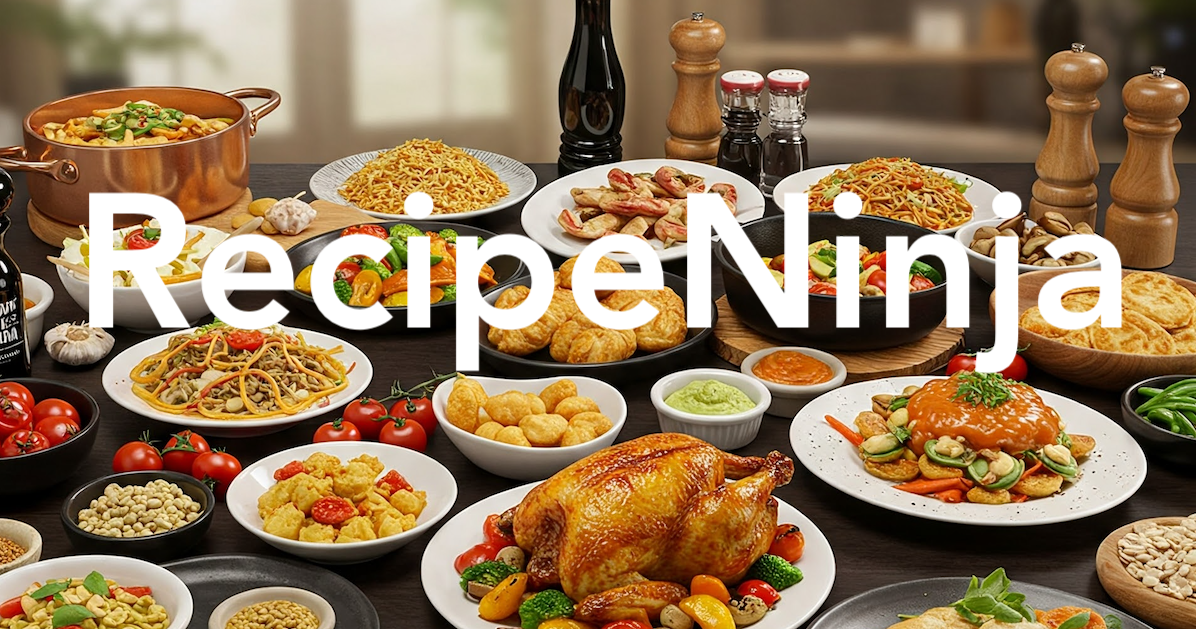
A polished, voice-controlled cooking app built almost entirely with AI got 126 upvotes on Hacker News — and its creator’s brutally honest post-mortem is more instructive than the demo.
It’s easy to clip the highlight reel from RecipeNinja and call it a win for the “anyone can build software now” crowd. A solo developer ships a genuinely slick, voice-controlled recipe app. Simon Willison — one of the most respected voices in practical AI tooling — tries the voice feature and calls it “genuinely one of the best voice interfaces I’ve ever tried.” The project lands 126 points on Hacker News. Roll credits on the AI revolution.
But the more interesting story is buried in the comments, written by the maker himself. RecipeNinja isn’t a story about how easy AI made things. It’s the clearest field report I’ve seen on where vibe coding starts to hurt — and it comes from someone with the credibility to say so.
What was built
RecipeNinja bills itself as “your AI-powered cooking companion.” In practice it’s a beautiful, tablet-first recipe display app with a hands-free voice mode. The maker, who posts on Hacker News as seveibar, explained the origin plainly: “I built it because I was learning to cook more and I wanted a beautiful recipe app for my kitchen… I have an old iPad that I set up on a stand. I think the default recipe apps out there are pretty terrible and have terrible UX.”
The voice interface is the standout. You hit a “talk to chef” button and it guides you through a recipe — useful, as the maker notes, “when you’re actually cooking and your hands are messy etc. (e.g. you just put your hands in raw chicken and you need to set a timer, or your hands are covered in dough).” Willison’s test — saying “I have flour, eggs and milk, what should I make” and getting back a usable recipe — was, in his words, “super smooth.” Most recipes are pre-generated via a batch system rather than created live, which keeps the experience fast.
This is not a no-coder’s first app, which matters for context. seveibar’s HN profile lists him as the founder of SeamlessGov (Y Combinator S15) who is “now building tscircuit.” This is an experienced engineer and founder choosing AI-assisted development — and he’s candid that RecipeNinja is “kind of a playground app to learn the latest AI tools,” not a startup play.

The honest part
The reason this thread is worth your time is a single comment from the maker that reads like a confession. It’s worth quoting at length:
“I’m constantly fighting against AI mistakes and bad practices. The biggest issues I run into: The AI removes important code/functionality without me realizing, it’s very good at causing reversions… The AI adds tons of bad/redundant code, the codebase would be a nightmare for a senior eng to work in… It can’t really refactor without causing tons of regressions, so my architecture gets worse and worse over time and there’s not much I can do about it… I’m always scared to do sweeping changes because I don’t have comprehensive tests and I know the AI will cause regressions.”
Then the kicker: “Despite all that I’m still incredibly productive with it, more than I ever was before, so I’m sticking with it for now… Right now my codebase is at about 35k lines of code and it’s getting more painful as it gets bigger.”
He knows the fix — “good coding practices like writing tests, being modular, reviewing all the AI’s code” — but admits the human cost: “it’s a lot of work and slows you down, so I often don’t do all the things I should.”

Why this matters
Strip away the demo polish and you get the most honest answer yet to a question the industry keeps fudging: how far does vibe coding scale? The answer from someone who’s lived it: surprisingly far on velocity, and not very far on entropy management.
Notice the shape of his complaints. None of them are about whether the AI can write code — it obviously can. They’re all about time: regressions you don’t catch, architecture that quietly rots, refactors you’re too scared to attempt because the safety net (tests) was the boring work the AI let you skip. Vibe coding doesn’t remove the engineering discipline that keeps a 35k-line codebase alive; it just makes it optional in the moment and expensive later. The maintainability bill doesn’t disappear. It accrues interest.
That’s the ceiling, and it’s not a hard wall — it’s a swamp. You don’t hit a point where the AI can’t add the next feature. You hit a point where every change is slightly more likely to break two other things, where “the codebase would be a nightmare for a senior eng to work in,” and where the productivity dividend gets eaten by fear. Security is part of the same picture: commenter jryan49 worried aloud that “AIs write insecure code. I always have to remind it to be more secure,” noting the irony that the model could probably find the vulnerabilities if simply asked.
The optimistic read — and seveibar’s own bet — is that the tooling improves until it manages this entropy for you: AI that writes the tests, holds the architecture, and refuses to regress. That future may arrive. But RecipeNinja is a useful data point for today: a capable engineer, with AI, can ship something genuinely good and genuinely large alone — as long as he’s willing to be the senior engineer the AI isn’t, and honest about the days he isn’t.
That honesty is the real artifact here. Not the 35,000 lines. The willingness to say they’re getting heavier.
Why it matters
- Velocity is real, entropy is the tax. A solo dev shipped a polished, voice-driven app at ~35k LoC with AI — but the maker reports the codebase rotting toward “a nightmare for a senior eng,” with risky refactors and missing tests.
- The ceiling isn’t capability, it’s maintainability. Vibe coding doesn’t hit a wall where the AI can’t build more; it hits a swamp where each change risks regressions you can’t safely catch.
- Discipline is now optional — and that’s the trap. Tests, modularity, and code review still matter; AI just makes skipping them frictionless, deferring the cost to future-you.
Source: Show HN: I Vibecoded a 35k LoC Recipe App (Hacker News, 126 points, 167 comments). Project: recipeninja.ai. Image: official RecipeNinja preview.