Building a No-Signup Code Editor That Beats Google Docs
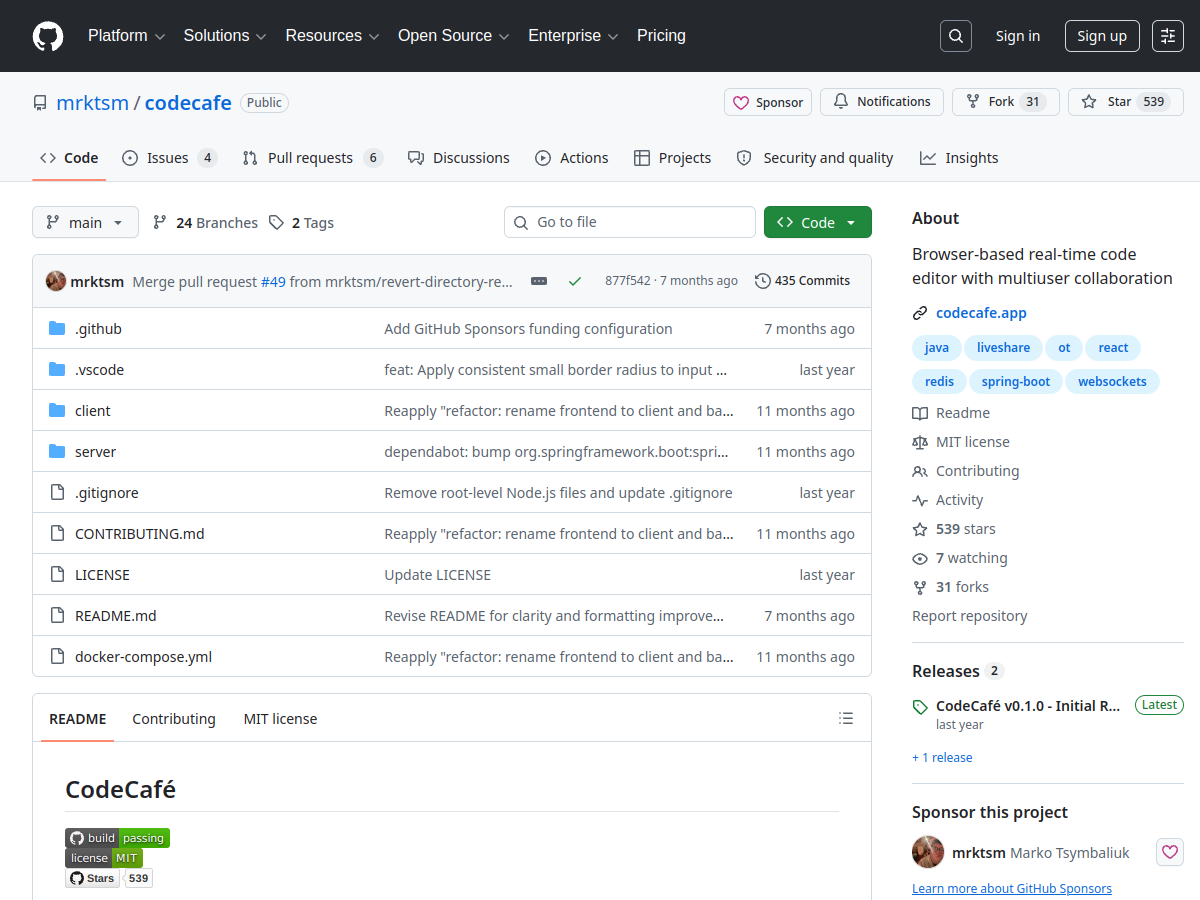
Imagine teaching a coding class using Google Docs. That’s the reality a developer, mrktsm, stumbled upon, and the spark for CodeCafé. It’s a browser-based editor where you click a link and start coding with someone, no accounts, no installs, no fuss.
Against the Grain with Operational Transformation
The technical guts are what make this interesting. While many modern collaborative tools use Conflict-Free Replicated Data Types (CRDTs), mrktsm built a custom Operational Transformation (OT) system from scratch. It’s the same tech that powers Google Docs. When asked why he didn’t use a simpler library like Yjs, he was refreshingly honest. “Good question — before diving into the project, I did have the chance to choose,” he commented. “I looked into both OT and CRDTs and found that OT is widely used in collaborative editors like Google Docs, so I leaned that way. I wouldn’t say it was a deeply informed decision — I just had more reference points for OT at the time.” It’s a classic case of building the complex thing to truly understand it.
Live, But How Live?
The app uses React and TypeScript on the frontend, with a Java/Spring Boot backend and Redis handling the real-time sync via WebSockets. It nails the core promise: instant collaboration. But it’s not a full-fledged IDE. As commenter jasonjmcghee pointed out, VS Code’s Live Share also offers in-browser pairing without an account for the guest. Where CodeCafé could carve a niche is in its simplicity and, as one user speculated, as a “pair with me” tool for AI coding assistants. The big question from the community was about execution. Indigodaddy asked, “Does the preview work for dynamic server content eg python, nodejs, php etc?” That’s the next frontier—moving from a shared notepad to a shared development environment.
The Devil in the URL Details
Even the best ideas need polish. A sharp piece of feedback from user omneity focused on a tiny but crucial detail: the session URL. “It could be nice to auto-generate a unique url on page load… Bonus is that it gives the user a certain confidence to reload the page.” mrktsm’s response showed a builder in the wild, iterating in real-time: “Thanks for the feedback! I clear the session URL after joining because I thought it looked cleaner, but I might start leaving it in if it helps with reload confidence.” It’s a perfect snapshot of the trade-offs between a clean interface and user-assuring functionality.
CodeCafé isn’t trying to kill VS Code. It’s solving a specific, painful problem with a remarkably straightforward solution. It’s the kind of tool that makes you wonder why it wasn’t always this easy.
Source: HackerNews